If you've ever stood in your driveway looking up at your roof and wondering whether it's time, you're not alone. It's one of the most common questions we hear from homeowners across Greenville and Eastern North Carolina — and one of the hardest to answer from the ground.
At Roofing Solutions NC, we've spent more than 15 years inspecting, repairing, and replacing roofs in this part of the state. We've learned that the warning signs you read about online are only part of the story. Our climate, our storms, and the way a roof was installed all play a big role in how long it lasts. Here's what we actually look for, and how we decide whether a roof needs a repair or a full replacement.
The Honest Answer on Roof Age in Eastern NC
Most architectural shingles are advertised to last 25 to 30 years or more. In our experience, that's not what happens here. Around Greenville and Eastern NC, a typical architectural shingle roof gives about 15 to 20 years of reliable service before replacement starts to make more sense than repair. Once your roof reaches that range, it deserves a closer look — especially after storm season.
Why Roofs Wear Out Faster Here
Eastern North Carolina is tough on roofs. These are the four things we see doing the most damage.
Heat and Humidity
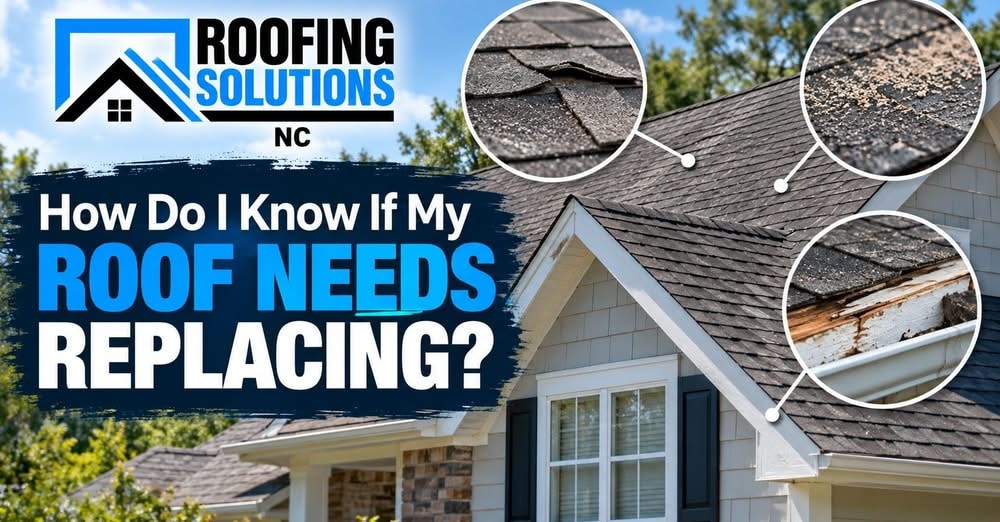
Our long, hot, humid summers bake shingles day after day. Over time, the shingles lose the granules that protect them from the sun. Once those granules are gone, the shingles dry out, turn brittle, and start to crack.
Hurricanes and High Winds
Tropical storms and strong wind events are part of life here. Wind can lift, crease, or tear shingles, and that damage often isn't visible from the ground. A shingle that's been lifted and broken its seal may lie flat again and look fine, but it's no longer protecting your home the way it should.
Poor Attic Ventilation
This is one of the most overlooked causes of early roof failure we see. When an attic can't breathe, heat and moisture get trapped. That cooks the shingles from underneath and can rot the roof decking. We've seen roofs that should have had years of life left wear out early because the ventilation was never set up correctly.
Algae, Moss, and Trees
Those black streaks you see on so many roofs in our area are algae. A little staining is mostly cosmetic. But shade, overhanging limbs, moss, and debris hold moisture against the roof and clog gutters and valleys. Over time, that trapped moisture shortens the life of your roof.
Signs Your Roof May Need Replacing
Here are the signs we pay the most attention to during an inspection. One of these alone doesn't always mean you need a new roof. When we see several together, or see them across the whole roof, replacement usually becomes the smarter choice.
Shingle Problems Across the Whole Roof
A few damaged shingles in one area can usually be repaired. When we find problems spread across multiple slopes, it tells us the roof is wearing out as a whole. Watch for:
- Curling or cupping at the edges
- Cracked or brittle shingles
- Bald spots where the granules have worn away
- Loose granules that rub off or wash away easily
- Shingles that are missing, flapping in the wind, or keep blowing off
Fibers Shining in the Sunlight
This is one of the signs we look for that most homeowners have never heard of. When shingles degrade far enough, the protective granules and asphalt wear away and expose the fiberglass mat inside. On a sunny day, you may notice tiny fibers shining or glinting on the roof surface. When we see that, it tells us the shingle material itself is breaking down and no longer protecting your home the way it should. A patch won't fix a shingle that's worn through to its core.
Granules in Your Gutters
Sometimes the first clue shows up in your gutters. If you're finding what looks like black sand in your gutters or at the bottom of your downspouts, those are shingle granules. Some granule loss is normal on a brand-new roof. Heavy granule loss on an older roof means the shingles are losing their protective layer. Just keep in mind that not every worn roof leaves granules in the gutters, so a clean gutter doesn't always mean a healthy roof.
Leaks and Water Stains
Brown or yellow stains on ceilings, damp insulation, peeling paint near the ceiling, or a musty smell in the attic all point to water getting in. One leak in one spot may be a repair. Leaks that keep coming back, or leaks in different parts of the house, usually point to a roof that's failing more broadly.
Sagging or Soft Spots
If your roofline dips or looks wavy, or the decking feels soft, moisture has likely damaged the wood underneath. This is a structural concern and should be looked at right away.
Daylight in the Attic
If you can see light coming through the roof boards in your attic, water can get through too.
A Roof That Looks Fine From the Ground
This is the one homeowners underestimate most. From the driveway, a roof can look perfectly normal while hiding wind-damaged shingles, failing seals, worn flashing, or rotting decking. That's why we always recommend a full inspection instead of judging a roof from the street.
How We Decide Between Repair and Replacement
We know homeowners worry about being talked into a roof they don't need. So here is exactly how we make our recommendation.
We Recommend a Repair First When It Makes Sense
If your roof still has good life left and the damage is limited to one area, we'll recommend a repair and tell you so. Not every problem needs a new roof, and we'd rather earn your trust than oversell you.
We Look at Age and How Far the Damage Has Spread
Once a roof reaches 15 or more years old here and we're finding problems on several slopes, repairs usually stop being worth the money. You end up paying to patch a roof that's near the end of its life anyway.
We Use the Repeat Repair Rule
If your roof has needed two or more repairs in just a few years, we'll tell you it's probably time to put that money toward a replacement instead. Repeated repairs are often a sign the whole system is wearing out.
We Check Insurance First After a Storm
If your roof may have storm damage, we look at whether it qualifies for an insurance claim before you spend anything out of pocket. Wind and storm damage can sometimes be covered, and you deserve to know your options before making a decision.
What to Expect From a Roofing Solutions NC Inspection
Free and no pressure
Our inspections are free. We'll tell you honestly whether you need a repair, a replacement, or nothing at all yet.
Photos of everything
We photograph what we find on the roof and in the attic so you can see exactly what we see. No guessing and no taking our word for it.
Help with insurance
If there's storm damage, we document it to insurance standards and help guide you through the claim process.
FORTIFIED and grant guidance
As an IBHS FORTIFIED Certified Contractor, we can tell you if a FORTIFIED roof makes sense for your home, and whether you may qualify for programs like the North Carolina Strengthen Your Roof grant when funding is available.
If a replacement is the right call, we'll walk you through a clear written proposal with options that fit your home and your budget.
Why Homeowners Trust Us With Their Roofs
Roofing Solutions NC has served homeowners across Eastern and Coastal North Carolina for more than 15 years. We're a licensed North Carolina General Contractor (#105085), an Owens Corning Platinum Preferred Contractor, and factory trained with Owens Corning, CertainTeed, and Mule-Hide. Our team also includes Xactimate-trained staff to support homeowners through insurance claims. More importantly, we live and work here. We know what our heat, humidity, and storms do to a roof, and we give you the same honest advice we'd give our own families.
Not Sure If Your Roof Needs Replacing?
If your roof is 15 years old or older, you've been through a recent storm, or you've noticed any of the signs above, don't wait for a leak to make the decision for you. Schedule your free, no-pressure roof inspection today.
Owens Corning Platinum Preferred · IBHS FORTIFIED Certified · NC Licensed General Contractor #105085